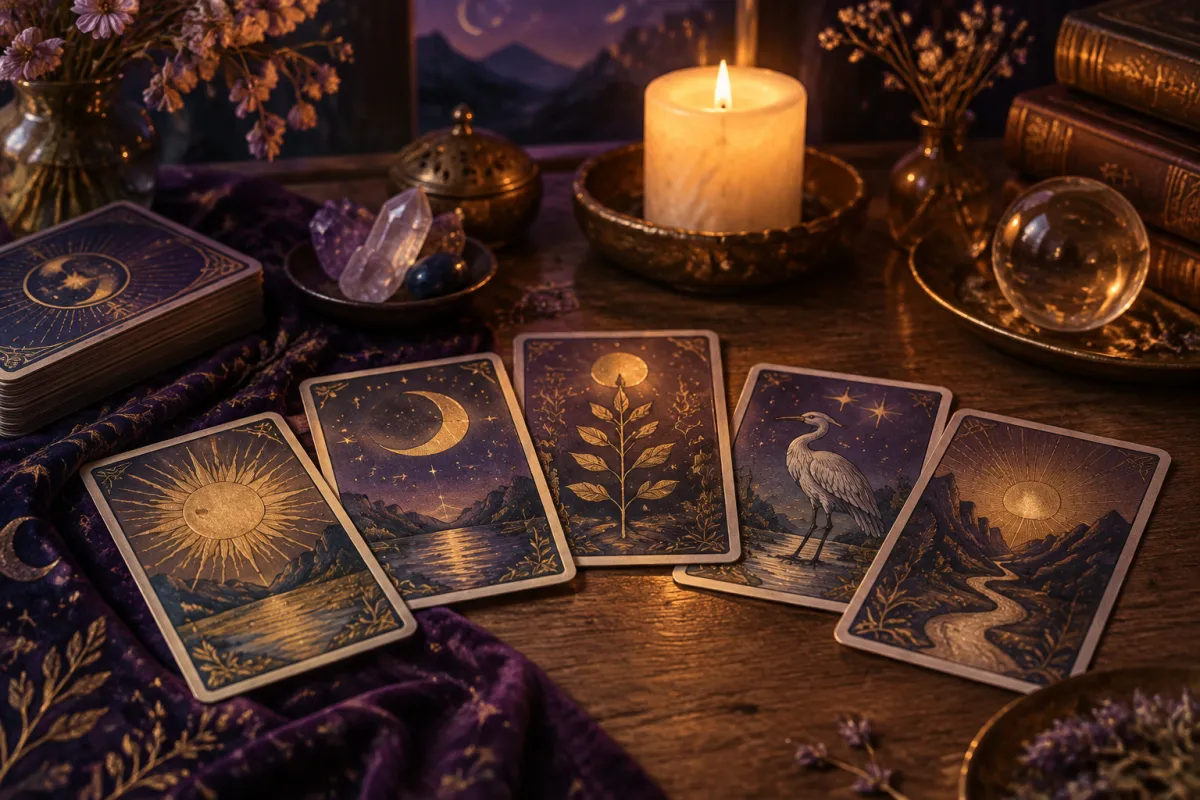
Tarot for Self-Reflection and Personal Growth, Even for Skeptics
Tarot cards carry centuries of tradition. Some people see them as a tool for prediction or spiritual insight. Others feel more skeptical about what they can actually do. No matter where you stand, using tarot for self-reflection can be practical and eye-opening.
This article focuses on tarot as a source for new perspectives. You do not need to believe in mystical forces for tarot to support your personal growth. Many people use the cards for personal exploration, creative breakthroughs, or as prompts for honest self-talk. That approach is open to everyone.
What Tarot Really Offers
Tarot does not have to be about supernatural predictions. For many, the value comes from the images, symbols and stories stirred up by the cards. Simply interacting with them can push you to see a situation differently.
Psychologists even use similar tools, like inkblots, to invite open discussion. The pictures on tarot cards spark your imagination. They can bring forward feelings or associations you may have buried. That is why even skeptics can find real-world value in tarot readings.
Getting Started: Skeptic-Friendly Tarot Practice
You do not need experience or spiritual beliefs to use tarot for reflection. Here are some steps that work:
Pick a deck with artwork that speaks to you. Most beginners use the Rider-Waite-Smith deck, but anything clear and pleasant is fine. Set aside 10–20 minutes. All you need is a table, notebook, and a little curiosity.
Shuffle, draw one card, and look at it closely. Write down the first thoughts, memories or images it brings up. Avoid checking guidebooks at first. Focus on your gut reactions. When you are ready, compare your ideas with suggested meanings from a guide or website.
Using Tarot for Self-Reflection
People often draw a card in response to a question like, 'What am I missing about this situation?' or 'Which part of myself needs attention now?' The artwork can bring up things you did not expect. This is especially helpful with tricky feelings or big decisions.
If you notice the card reminds you of a person in your life or a recent mood, explore why. Let the card be a mirror. Do this regularly, and you may start noticing patterns in your thoughts and responses.
You can also use spreads designed for reflection, not fortune-telling. Try a simple three-card spread: past, present, future. Or use prompts like 'strength, challenge, advice.' Write down your impressions for each card.
Personal Growth Without Supernatural Claims
Research shows that reflecting on images, metaphors, or open-ended prompts is useful in many talk therapies. Tarot works in a similar way. The insights you gather emerge from your own mind and experience.
Some people find meaningful coincidences or personal patterns in the cards. Others simply enjoy the process as creative self-inquiry. There is no need to attribute your insights to outside forces if that does not fit your worldview.
It is important to say: tarot should never be used for medical, legal or financial decisions. If a reader claims tarot can lift curses, cure illness, or remove bad luck, for a price, these are known manipulative tactics in the industry. Tarot works best as a reflective tool, not a promise of certainty.
If you ever feel pressured to keep a tarot reading going, or promised specific future events, it’s wise to pause. Good tarot readers support your reflection and agency.
Building a Reflective Tarot Routine
If you try tarot for self-reflection, set aside regular quiet time. Approach the cards as curious rather than expecting answers from outside yourself. Treat the practice like journaling, meditation or creative writing.
Over time, you may notice new ideas and personal growth through your own observations. Whether you see the cards as meaningful symbols or just helpful prompts, the real work happens within.
Common questions
- Do I have to believe in psychic powers to use tarot for growth?
- No. Many people use tarot as a creative prompt or tool for self-reflection, without believing in supernatural mechanisms.
- Will tarot predict my future or give me absolute answers?
- Tarot is more about sparking insight than giving concrete, unchangeable answers. It can offer perspective, but it cannot predict the future.
- Is there a scientific basis for using tarot this way?
- Many therapists use prompts, metaphors, or symbolic cards to unlock thoughts and feelings. Tarot can be used similarly, even if the cards themselves are not 'proven' to work in a scientific sense.
- What if I get a card with a scary or negative image?
- It’s common for certain cards to look startling, but these images are just starting points for reflection. Focus on what the card stirs up for you, and remember that meanings are up for your own interpretation.
- Can tarot replace therapy or professional advice?
- No. Tarot can support self-reflection, but it is not a substitute for therapy or professional advice, especially for medical, financial or legal issues.
An article is written for everyone
A reading is written for you. Our advisors are available around the clock.