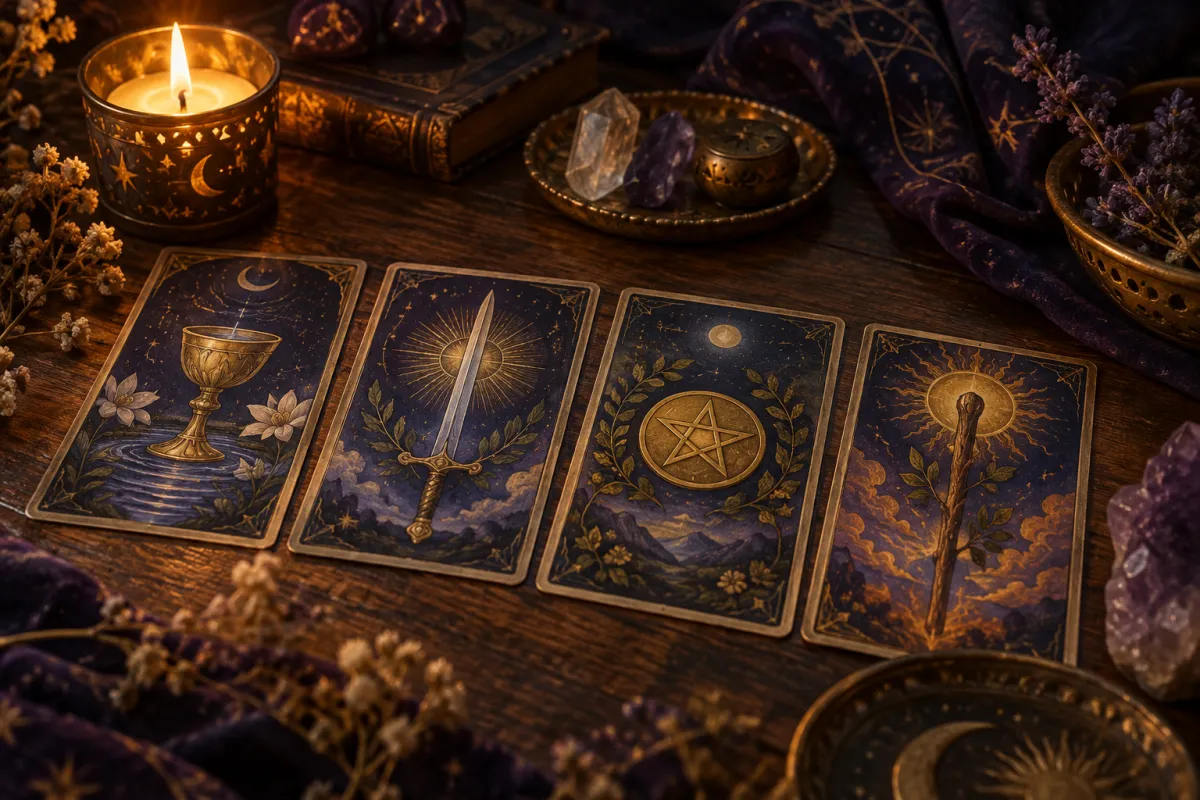
How Tarot Suits Reveal Your Strengths and Weaknesses
Tarot readings often begin with a spread of cards. Each card belongs to a suit: Cups, Pentacles, Swords, or Wands. Many readers look to these suits to find patterns in a person’s life, especially their strengths and weaknesses. The symbolism behind each suit can point to different areas that matter to you. Patterns in your tarot results may help you understand your character, habits, and challenges.
This guide explains how the suits commonly match up with qualities in people. These are traditional meanings, passed down by tarot readers, and shaped by the culture around them. Some people find the suits match what they know about themselves. Others notice qualities they would like to improve. There is no single correct way to read the suits, but understanding them can add depth to your own interpretations.
Remember: No tarot reading can predict the future with certainty or replace professional advice. Readers can suggest ideas, but the cards themselves do not make decisions for you.
What Each Suit Represents
The suits are part of the Minor Arcana, which covers day-to-day situations, emotions, and attitudes. Each suit has a traditional link to an element and a life area. Here’s how readers commonly see them:
- Cups: Linked to water, emotions, relationships, creativity, and intuition.
- Pentacles: Linked to earth, work, finances, routines, and material stability.
- Swords: Linked to air, thoughts, communication, conflict, and analysis.
- Wands: Linked to fire, ambition, energy, passion, and growth.
Cups: Emotional Insight and Vulnerability
Cups focus on feelings, relationships, and how you connect with others. Many people report that a strong Cups presence points to empathy, creativity, or emotional intelligence as strengths. You may be good at comforting friends or picking up on moods.
Weaknesses that Cups cards can suggest include avoiding conflict, over-sensitivity, or trouble setting boundaries. A lack of Cups, or many reversed Cups, can warn of repressed feelings, isolation, or emotional burnout.
Readers use these patterns to talk about balance. If you have many Cups cards, you might be urged to check if your emotions are guiding you well, or holding you back.
Pentacles: Practical Strengths and Limits
Pentacles speak to work, home, money, and health. Many readers say that a strong showing of Pentacles cards suggests strengths like reliability, discipline, and practical problem-solving. People with these cards often focus on stability and making plans that last.
When Pentacles show up as a weakness, it could point to being too cautious or materialistic, or getting stuck in routines. Some spreads with few Pentacles raise concerns about financial worries or neglecting your physical needs.
These cards can help some people see the value in patience and careful planning, but also remind them to avoid getting stuck in comfort zones.
Swords: Mental Clarity and Challenge
Swords deal with thoughts, decisions, and communication. Readers commonly take these as pointing towards mental strength, logic, or an ability to find solutions under pressure. You may spot patterns in your thinking or your approach to conflicts.
Swords can also warn of self-criticism, anxiety, or being overly blunt. Too many Swords, readers say, can show restlessness, argument, or mental burnout. Very few Swords might suggest avoidance or passivity.
The tradition holds that Swords call for honesty with yourself about your motives, and a willingness to change when you see a habit causing harm.
Wands: Drive and Burnout
Wands are about energy, inspiration, and personal drive. Many people report that Wands cards line up with strengths like enthusiasm, charisma, and leadership. They may suggest a willingness to act or to risk something new.
But Wands can also alert you to weaknesses like impatience, ego, or scattered focus. Too many Wands might point to taking on too much, getting lost in ideas, or chasing excitement without finishing tasks.
A balance of Wands cards, readers find, can help you see when your excitement is constructive, or when it is time to rest.
Can Tarot Suits Replace Self-Reflection?
It is tempting to see the suits as labels. But most experienced readers view them as conversation starters, not final judgments. The cards can highlight issues and strengths to reflect on. They do not define you.
Most people have traits from every suit. A balanced life will move through all four suits in different situations. Some days need Cups, some need Wands. You can use the suits as a tool for self-awareness, but long-term change comes from consistent habits and honest self-reflection.
Be careful with readers who pressure you or claim they can "fix" your weaknesses for a price. Honest tarot work encourages self-understanding, not dependence.
Common questions
- Can tarot really show my strengths and weaknesses?
- Tarot cannot measure personal traits directly. Many people find that the suits’ traditional meanings match what they know about themselves, or highlight areas to reflect on. The cards can prompt self-questioning, but they do not diagnose or judge.
- How do I notice patterns in the suits?
- Look for repeated suits in your readings. Are you seeing mainly Cups, or is one suit missing? Some readers look for reversed cards or suit dominance to raise questions about strengths and weaknesses.
- Should I worry if one suit is missing from a reading?
- Not always. Many normal spreads lack one or more suits. It may reflect what is not active in your life now, or just be a quirk of random draw. Most readers suggest using this as a prompt, not a cause for worry.
- Can tarot reading predict my future success or failure?
- No tarot reading can promise specific outcomes. Suits may suggest patterns or habits that matter to your future, but they cannot guarantee results. Use readings as a supplement to your own judgment.
- How can I use tarot suits for self-improvement?
- Notice which suits recur. Reflect on what strengths they highlight and where you might have blind spots. The suits can help guide self-inquiry, but lasting change depends on action and self-awareness beyond the cards.
An article is written for everyone
A reading is written for you. Our advisors are available around the clock.